
 Ingredient
Cups to Grams Converter
Convert cups to grams by ingredient — flour 120g, sugar 198g, butter 227g. US & metric cup. Free, no sign…
120 g / cupUse Tool →
Pick the ingredient, type the cups, get the grams — flour 120 g, sugar 198 g, butter 227 g, and 25+ more, in a US or metric cup.
Flour 120 g/cupSugar 198 g/cupButter 227 g/cupUS & metric cup63 ingredients
Browse all 51 tools →51 free tools · 63 ingredients · US & metric cup · no sign-up
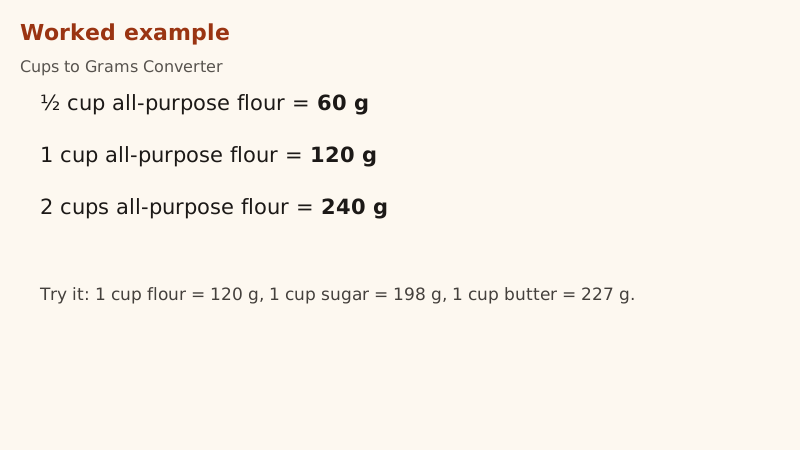
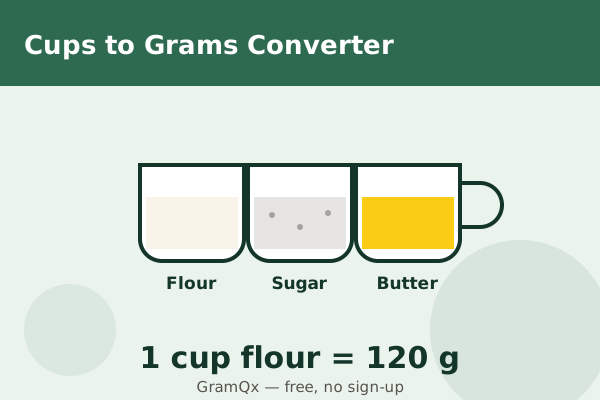 1 cup flour = 120 g
Standard: King Arthur, spoon-and-level — flour 120 g/cup, sugar 198 g/cup, butter 227 g/cup. Flour note: USDA rounds flour to 125 g/cup; this site uses 120 g (King Arthur) and says so on every flour page.
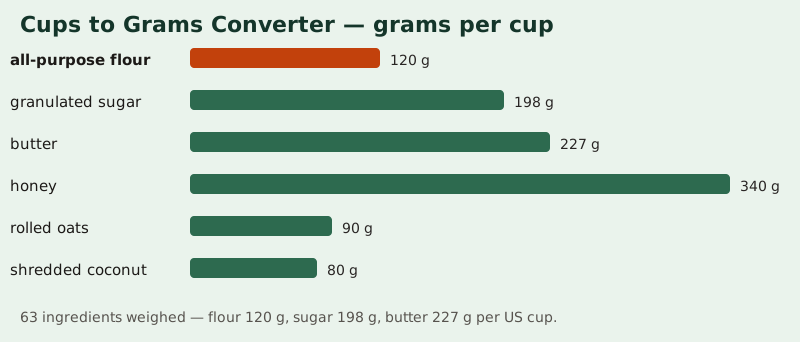
There is no single answer to how many grams are in a cup, and any converter that gives you one number without asking which ingredient is guessing. A cup measures volume — how much space something takes up. A gram measures weight — how heavy it is. The bridge between them is density: how much of that ingredient fits into the space of a cup. Flour is light and airy, so a cup weighs 120 grams. Sugar is denser, so a cup weighs 198 grams. Butter is denser still at 227 grams, and honey, which is a thick liquid with no air in it at all, weighs 340 grams per cup. Water, the reference liquid, weighs 237 grams per cup, because one US cup holds 236.6 millilitres and one millilitre of water weighs one gram. The same cup, filled with different ingredients, can weigh anywhere from 80 grams of shredded coconut to 340 grams of honey. That range is the whole subject of this site, and it is why the converter above asks for the ingredient before it gives you an answer.
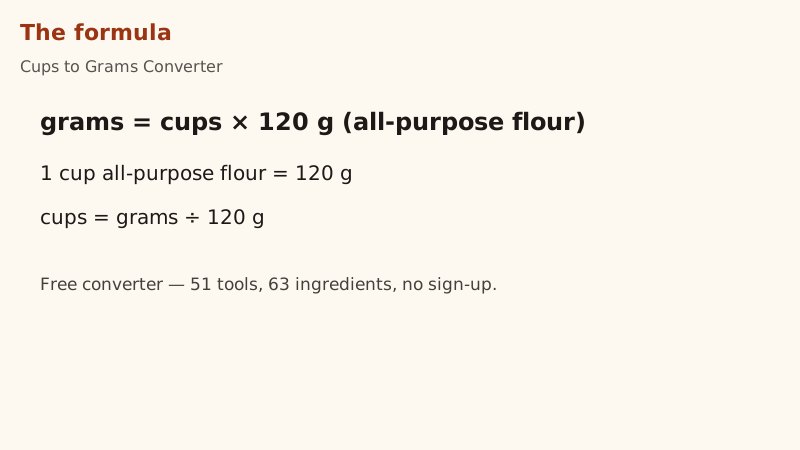
Pick flour and one cup is 120 grams. Pick sugar and the same cup is 198 grams. Pick butter and it is 227 grams. The tool shows the grams-per-cup value it uses and writes out the formula — grams equals cups times grams per cup — so you can check the maths yourself. If a recipe or a chart ever gives you a cups-to-grams number without naming the ingredient, stop and ask which ingredient it means, because the number is meaningless without it. I wrote this page because home bakers in the US and the UK keep asking exactly these questions — cups to grams, grams to cups, how many grams in a cup, and every ingredient version of them — and they deserve a straight answer. (On search volumes: the figures I could find were not verified, so I do not quote one.)
Tap “Use Tool” on any card to open that converter. Every tool page has the full guide built in.
IngredientConvert cups to grams by ingredient — flour 120g, sugar 198g, butter 227g. US & metric cup. Free, no sign…
 Unit
Convert millilitres to cups — 1 US cup = 236.6 mL, 1 metric cup = 250 mL. Free, no sign-up.
 Unit
Convert millilitres to fluid ounces — 1 fl oz = 29.57 mL. Free, no sign-up.
 Unit
Convert grams to millilitres by ingredient — water, milk and more, with densities. Free.
 Unit
Convert pints to cups — 1 pint = 2 cups. Free, no sign-up.
 Unit
Convert tablespoons to teaspoons — 1 tbsp = 3 tsp. Free, no sign-up.
 Unit
Convert quarts to cups — 1 quart = 4 cups. Free, no sign-up.
 Unit
Convert cups to fluid ounces and weight ounces — 1 cup = 8 fl oz. Free, no sign-up.
 Unit
Convert ounces to grams — 1 oz = 28.35 g. Free, no sign-up, works for baking and kitchen weighing.
 Oven
Convert oven temperatures — Fahrenheit, Celsius and Gas Mark — for UK and US recipes. Free.
 Unit
Convert cups to tablespoons — 1 cup = 16 tbsp. Free, no sign-up.
 Unit
Convert tablespoons to cups — 16 tbsp = 1 cup. Free, no sign-up.
 Unit
Convert teaspoons to tablespoons — 3 tsp = 1 tbsp. Free, no sign-up.
 Ingredient
Convert cooked rice cups to grams — 1 cup of cooked rice in grams, with tables for 1/4, 1/2, 1 and 2 cups…
 Ingredient
Convert cooked quinoa cups to grams — 1 cup of cooked quinoa in grams, with tables for 1/4, 1/2, 1 and 2 …
 Ingredient
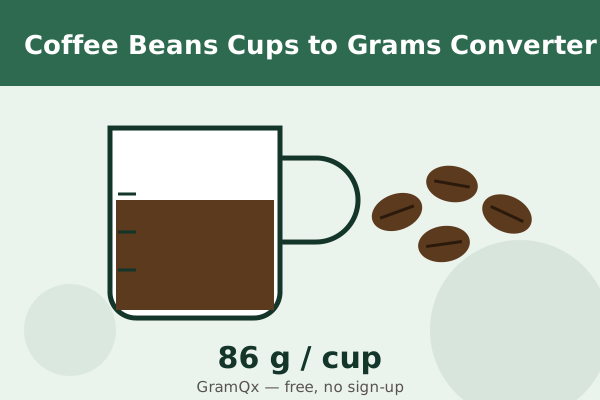
Convert coffee beans cups to grams — 1 cup of coffee beans in grams, with tables for 1/4, 1/2, 1 and 2 cu…
 Ingredient
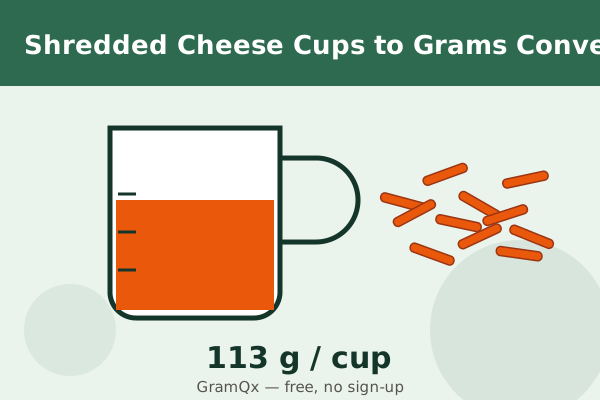
Convert shredded cheese cups to grams — 1 cup of shredded cheddar in grams, with tables for 1/4, 1/2, 1 a…
 Ingredient
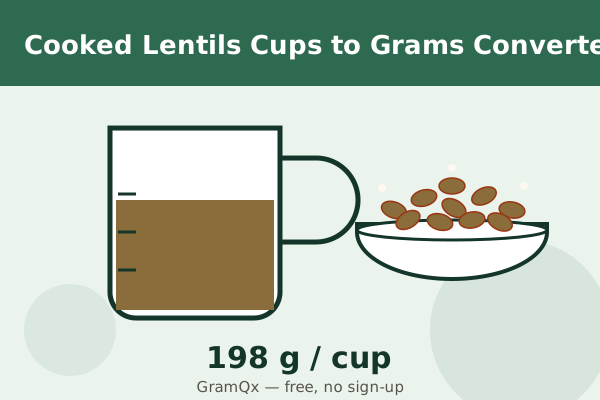
Convert cooked lentils cups to grams — 1 cup of cooked lentils in grams, with tables for 1/4, 1/2, 1 and …
 Ingredient
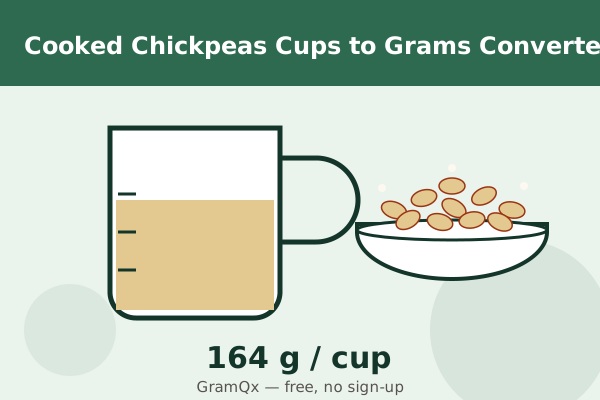
Convert cooked chickpeas cups to grams — 1 cup of cooked chickpeas in grams, with tables for 1/4, 1/2, 1 …
 Ingredient
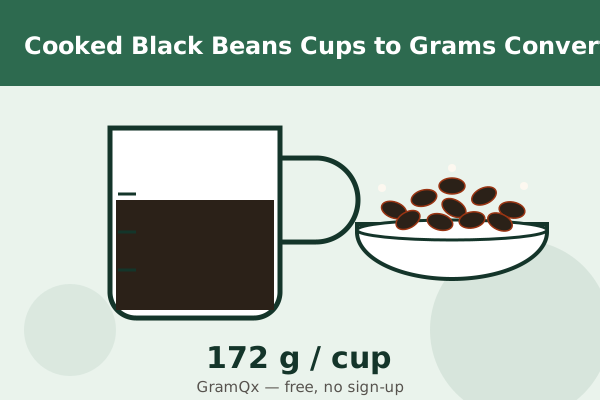
Convert cooked black beans cups to grams — 1 cup of cooked black beans in grams, with tables for 1/4, 1/2…
 Ingredient
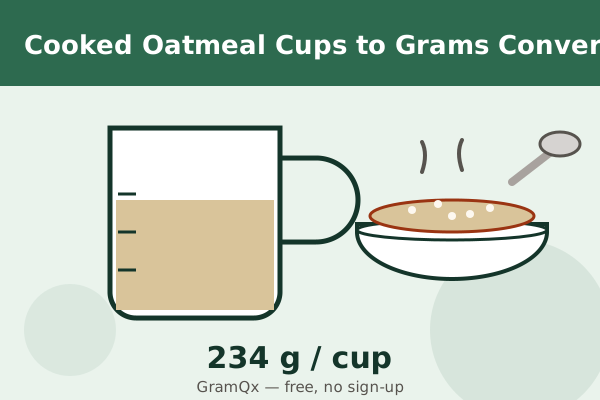
Convert cooked oatmeal cups to grams — 1 cup of cooked oatmeal in grams, with tables for 1/4, 1/2, 1 and …
 Ingredient
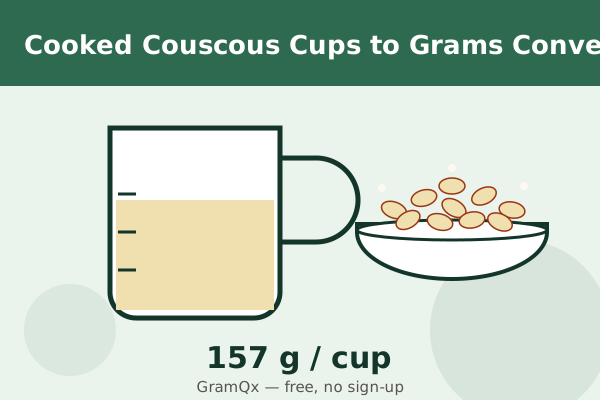
Convert cooked couscous cups to grams — 1 cup of cooked couscous in grams, with tables for 1/4, 1/2, 1 an…
 Ingredient
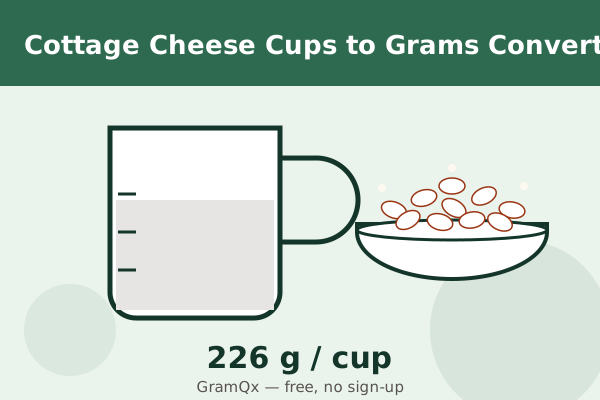
Convert cottage cheese cups to grams — 1 cup of cottage cheese in grams, with tables for 1/4, 1/2, 1 and …
 Ingredient
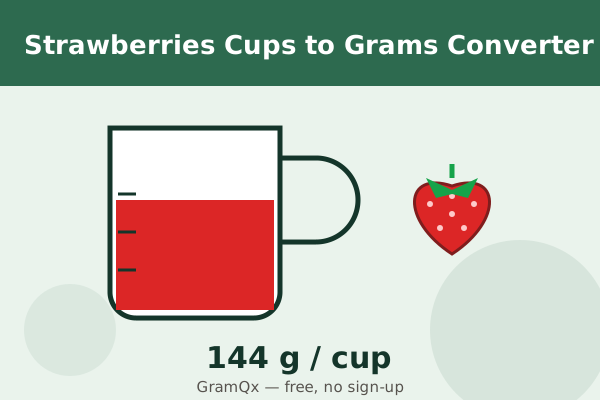
Convert strawberries cups to grams — 1 cup of strawberries in grams, with tables for 1/4, 1/2, 1 and 2 cu…
 Ingredient
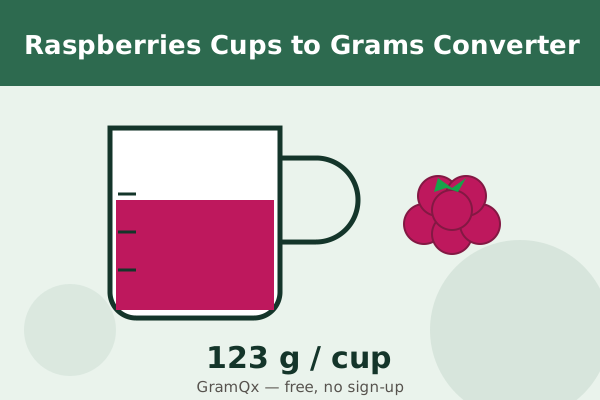
Convert raspberries cups to grams — 1 cup of raspberries in grams, with tables for 1/4, 1/2, 1 and 2 cups…
 Ingredient
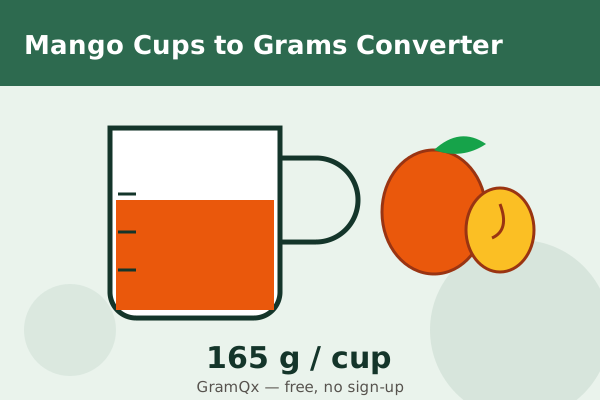
Convert mango cups to grams — 1 cup of mango in grams, with tables for 1/4, 1/2, 1 and 2 cups. Free, no s…
 Ingredient
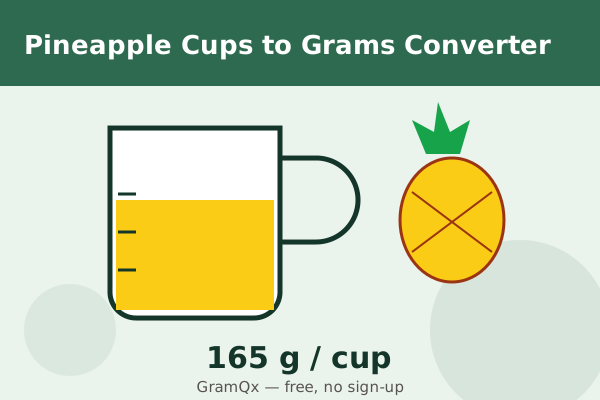
Convert pineapple cups to grams — 1 cup of pineapple in grams, with tables for 1/4, 1/2, 1 and 2 cups. Fr…
 Ingredient
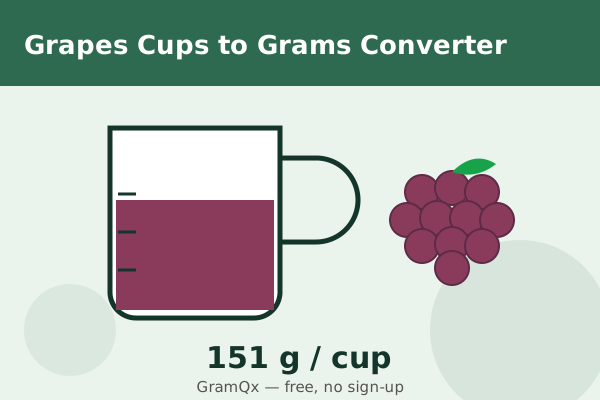
Convert grapes cups to grams — 1 cup of grapes in grams, with tables for 1/4, 1/2, 1 and 2 cups. Free, no…
 Ingredient
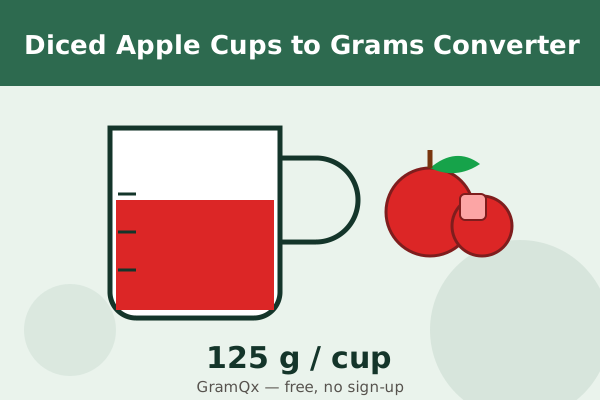
Convert diced apple cups to grams — 1 cup of diced apple in grams, with tables for 1/4, 1/2, 1 and 2 cups…
 Ingredient
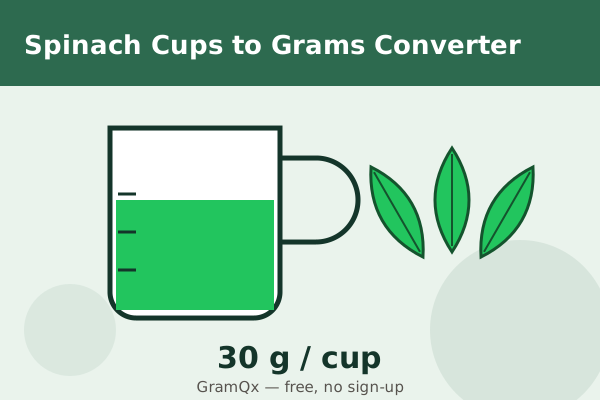
Convert spinach cups to grams — 1 cup of spinach in grams, with tables for 1/4, 1/2, 1 and 2 cups. Free, …
 Ingredient
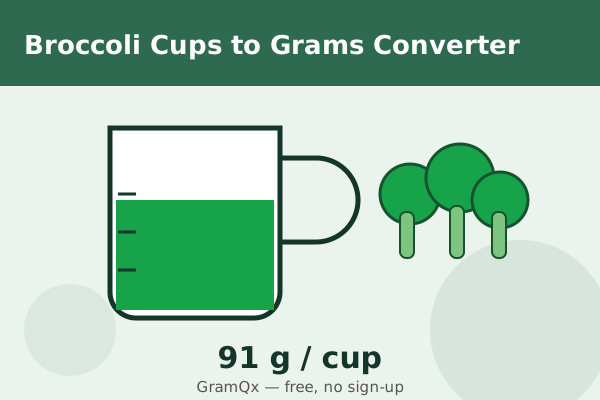
Convert broccoli cups to grams — 1 cup of broccoli in grams, with tables for 1/4, 1/2, 1 and 2 cups. Free…
 Ingredient
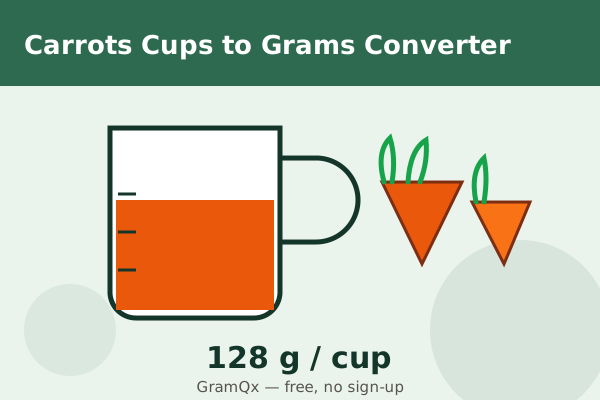
Convert carrots cups to grams — 1 cup of carrots in grams, with tables for 1/4, 1/2, 1 and 2 cups. Free, …
 Ingredient
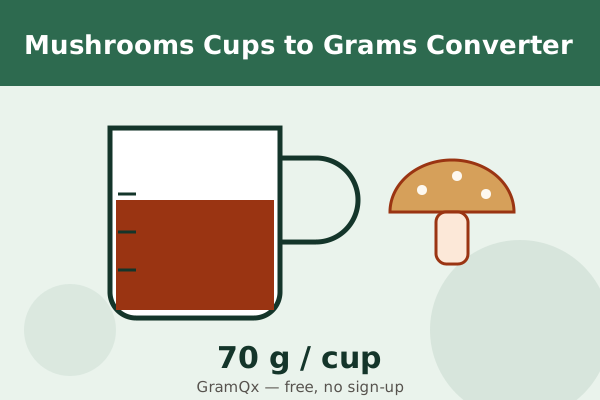
Convert mushrooms cups to grams — 1 cup of mushrooms in grams, with tables for 1/4, 1/2, 1 and 2 cups. Fr…
 Ingredient
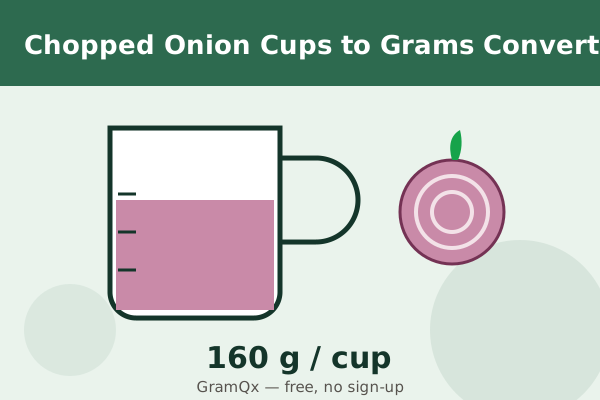
Convert chopped onion cups to grams — 1 cup of chopped onion in grams, with tables for 1/4, 1/2, 1 and 2 …
 Ingredient
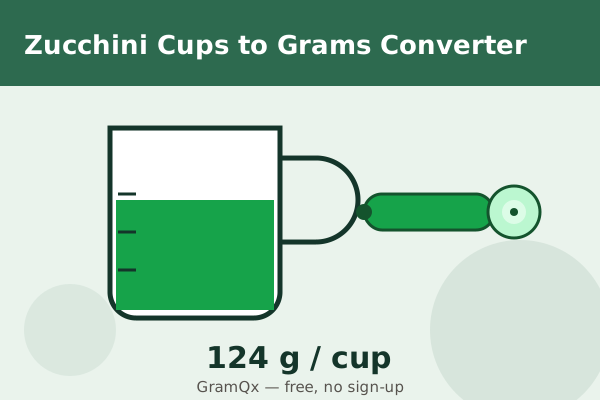
Convert zucchini cups to grams — 1 cup of zucchini in grams, with tables for 1/4, 1/2, 1 and 2 cups. Free…
 Ingredient
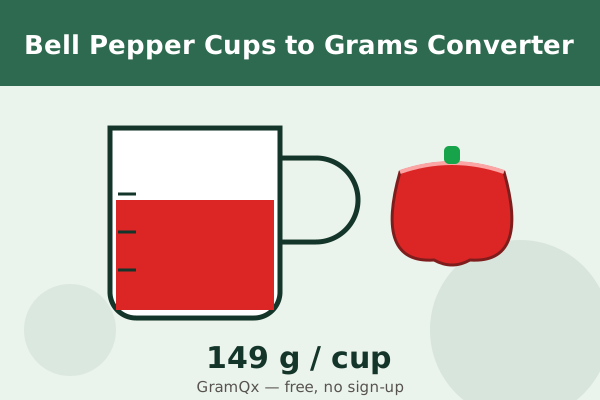
Convert bell pepper cups to grams — 1 cup of bell pepper in grams, with tables for 1/4, 1/2, 1 and 2 cups…
 Ingredient
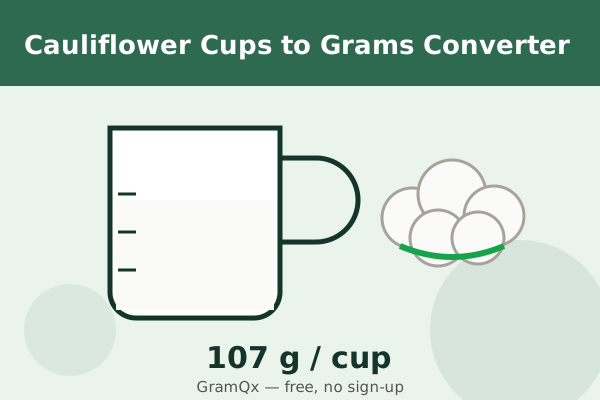
Convert cauliflower cups to grams — 1 cup of cauliflower in grams, with tables for 1/4, 1/2, 1 and 2 cups…
 Ingredient
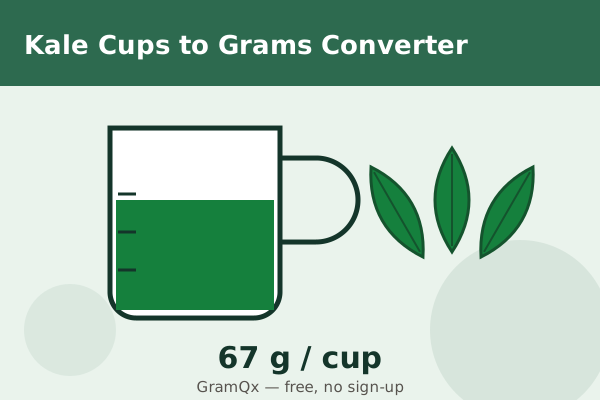
Convert kale cups to grams — 1 cup of kale in grams, with tables for 1/4, 1/2, 1 and 2 cups. Free, no sig…
 Ingredient
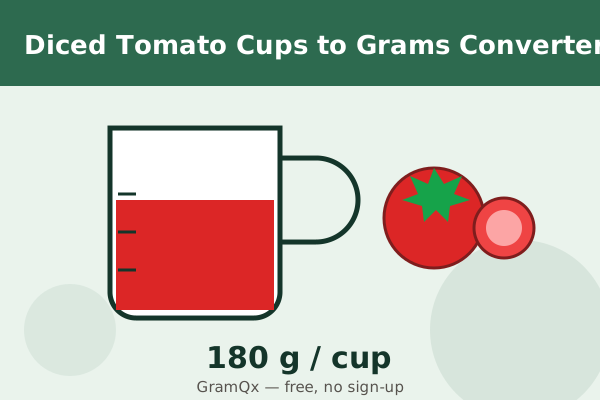
Convert diced tomato cups to grams — 1 cup of diced tomato in grams, with tables for 1/4, 1/2, 1 and 2 cu…
 Ingredient
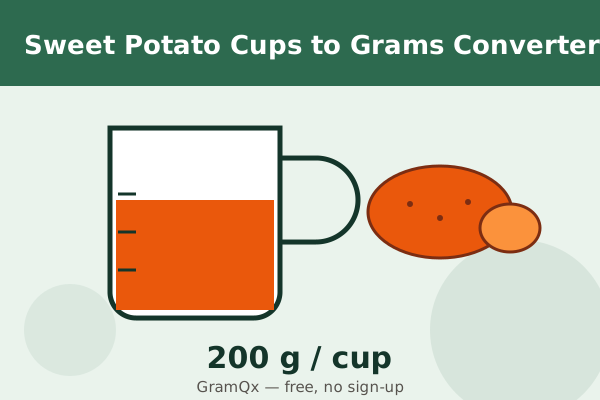
Convert sweet potato cups to grams — 1 cup of sweet potato in grams, with tables for 1/4, 1/2, 1 and 2 cu…
 Ingredient
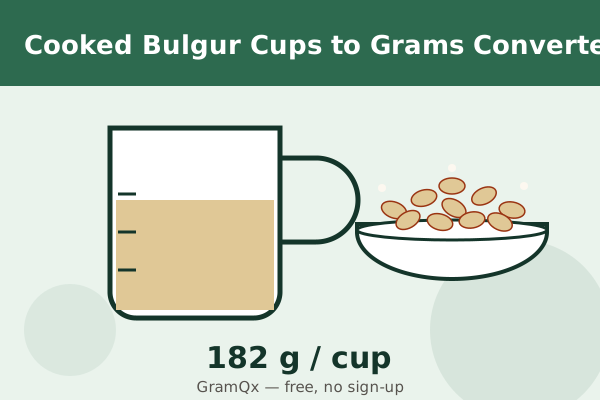
Convert cooked bulgur cups to grams — 1 cup of cooked bulgur in grams, with tables for 1/4, 1/2, 1 and 2 …
 Ingredient
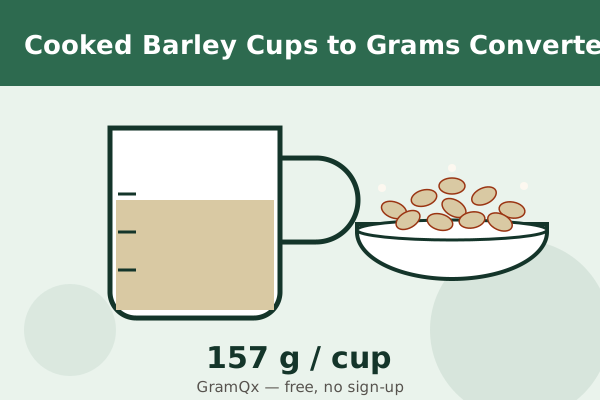
Convert cooked barley cups to grams — 1 cup of cooked barley in grams, with tables for 1/4, 1/2, 1 and 2 …
 Ingredient
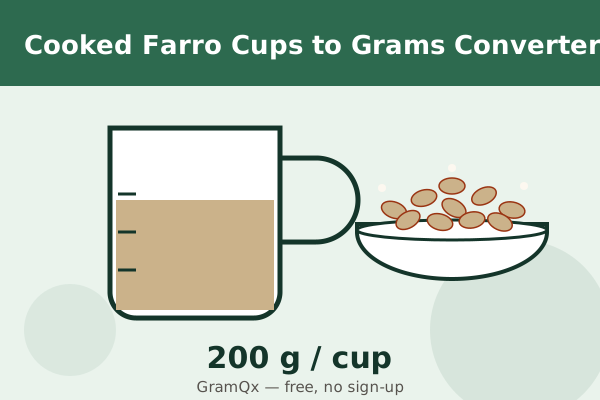
Convert cooked farro cups to grams — 1 cup of cooked farro in grams, with tables for 1/4, 1/2, 1 and 2 cu…
 Ingredient
Convert cooked edamame cups to grams — 1 cup of cooked edamame in grams, with tables for 1/4, 1/2, 1 and …
 Ingredient
Convert tablespoons of honey to grams — 1 tbsp honey = 21 g. Free, no sign-up.
 Ingredient
Convert tablespoons of sugar to grams — 1 tbsp sugar = 12.4 g. Free, no sign-up.
 Ingredient
Convert tablespoons of cinnamon to grams — 1 tbsp cinnamon = 7.8 g. Free, no sign-up.
 Egg
How much does an egg white weigh? 1 large egg white = 33 g. Free, no sign-up.
 Unit
Convert cups to litres — 1 US cup = 0.2366 L, 1 metric cup = 0.25 L. Free, no sign-up.
 Unit
Convert litres to cups — 1 litre = 4.23 US cups. Free, no sign-up.
 Baking
Convert cake pan sizes — round and square pans, volume and batter scaling. Free, no sign-up.
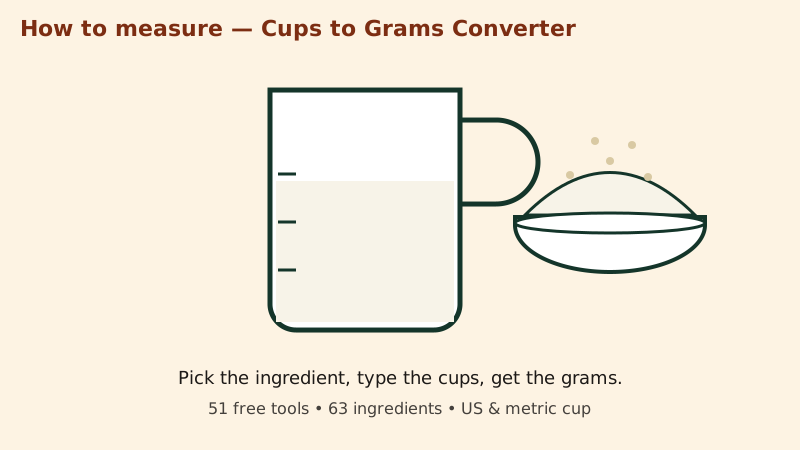
Using the converter takes about ten seconds. First, pick the ingredient — the tool will not convert without it, because there is no single cups-to-grams number that works for everything. Second, type the amount and choose cups, tablespoons or teaspoons. Third, choose the cup standard: US cup (236.6 mL) for most online recipes, or metric cup (250 mL) if your recipe is Australian, New Zealand or Canadian. The result appears immediately, with the calculation written out in full, for example 1 cup × 120 g per cup = 120 g. If you need the reverse, switch the direction and enter grams instead. The tool also shows the equivalent in ounces, so you can use whichever scale your kitchen has. Nothing is sent to a server and nothing is stored — the maths runs entirely in your browser, which is why it works even on a slow kitchen Wi-Fi connection.
A practical tip before you start: measure the ingredient the way the standard assumes. Spoon it into the cup, then level it off with the back of a knife. Do not scoop the cup through the bag, and do not tap the cup down to settle it. Scooping compresses dry ingredients and can add 20 to 30 grams per cup — enough to change a cake. Brown sugar is the one exception: it is packed into the cup on purpose. Everything else on this site is spooned and levelled, and every table on this page says so. For liquids, use a jug, read it at eye level, and remember that one US cup is 236.6 millilitres. For sticky ingredients like honey and golden syrup, grease the cup lightly first so they slide out cleanly.
The numbers worth memorising are few. All-purpose flour, spooned and levelled, is 120 grams per cup. Granulated sugar is 198 grams, usually rounded to 200. Butter is 227 grams, which is two sticks or sixteen tablespoons. Brown sugar, packed, is 213 grams. Powdered sugar is 120 grams. Honey is 340 grams. Rolled oats are 90 grams. Cocoa powder is 84 grams. Milk is 245 grams and water is 237 grams. Those ten numbers cover the great majority of baking conversions, and the full chart below gives the same values for sixty-three ingredients, with quarter, third, half and double amounts worked out for each one. Memorise the ones you use weekly and look up the rest — nobody needs to memorise all sixty-three. Two of these numbers deserve a warning. First, flour: King Arthur Baking gives 120 grams per cup, spooned and levelled, while the USDA rounds to 125 grams. This site uses 120 grams, names King Arthur as the source, and shows the 125-gram figure wherever flour is discussed. Second, brown sugar: the 213-gram figure only applies when the sugar is packed firmly into the cup. Loose brown sugar weighs far less, and a recipe that says a cup of brown sugar always means a packed cup.
Every number on GramQx follows one standard, so the tool, the tables and the articles all agree with each other. The standard is the King Arthur Baking ingredient weight chart, measured spoon-and-level, in a US cup of 236.6 millilitres. The USDA FoodData Central database is the second source, used where King Arthur does not publish a value. Where the two disagree, this site says so and names the value it uses. That is more honest than silently rounding, and it means a recipe converted on one page of this site will match a recipe converted on any other page. Values are kitchen estimates, not laboratory measurements: brands vary, humidity varies, and a cup of an ingredient from a different brand can differ by a few grams. For everyday baking that is fine. For competition baking or commercial work, weigh everything and record your own values.
This chart uses the King Arthur spoon-and-level standard in a US cup of 236.6 mL. Use it as a quick reference while you bake, or use the converter above for any amount not listed.
| Ingredient | 1 cup | 1/2 cup | 2 cups |
|---|---|---|---|
| All-Purpose Flour (plain flour) | 120 g | 60 g | 240 g |
| Bread Flour (strong flour) | 120 g | 60 g | 240 g |
| Whole Wheat Flour (wholemeal flour) | 113 g | 56 g | 226 g |
| Cake Flour (cake flour) | 100 g | 50 g | 200 g |
| Self-Raising Flour (self-raising flour) | 113 g | 56 g | 226 g |
| Granulated Sugar (caster sugar) | 198 g | 99 g | 396 g |
| Brown Sugar (soft brown sugar) | 213 g | 106 g | 426 g |
| Powdered Sugar (icing sugar) | 120 g | 60 g | 240 g |
| Butter (butter) | 227 g | 114 g | 454 g |
| Honey (honey) | 340 g | 170 g | 680 g |
| Rolled Oats (rolled oats) | 90 g | 45 g | 180 g |
| Cocoa Powder (cocoa powder) | 84 g | 42 g | 168 g |
| Rice (rice) | 185 g | 92 g | 370 g |
| Milk (milk) | 245 g | 122 g | 490 g |
| Water (water) | 237 g | 118 g | 474 g |
| Cream Cheese (cream cheese) | 232 g | 116 g | 464 g |
| Sour Cream (soured cream) | 230 g | 115 g | 460 g |
| Yogurt (yoghurt) | 245 g | 122 g | 490 g |
| Peanut Butter (peanut butter) | 258 g | 129 g | 516 g |
| Vegetable Oil (vegetable oil) | 218 g | 109 g | 436 g |
| Maple Syrup (maple syrup) | 315 g | 158 g | 630 g |
| Jam (jam) | 320 g | 160 g | 640 g |
| Salt (salt) | 292 g | 146 g | 584 g |
| Baking Powder (baking powder) | 192 g | 96 g | 384 g |
| Baking Soda (bicarbonate of soda) | 220 g | 110 g | 440 g |
| Almond Flour (ground almonds) | 96 g | 48 g | 192 g |
| Coconut (desiccated coconut) | 80 g | 40 g | 160 g |
| Chocolate Chips (chocolate chips) | 170 g | 85 g | 340 g |
| Cornflour (cornflour) | 128 g | 64 g | 256 g |
| Golden Syrup (golden syrup) | 340 g | 170 g | 680 g |
| Cream (double cream) | 238 g | 119 g | 476 g |
| Cooked Rice (cooked rice) | 158 g | 79 g | 316 g |
| Cooked Quinoa (cooked quinoa) | 185 g | 92 g | 370 g |
| Coffee Beans (coffee beans) | 86 g | 43 g | 172 g |
| Shredded Cheddar (grated cheddar) | 113 g | 56 g | 226 g |
| Cooked Lentils (cooked lentils) | 198 g | 99 g | 396 g |
| Cooked Chickpeas (cooked chickpeas) | 164 g | 82 g | 328 g |
| Cooked Black Beans (cooked black beans) | 172 g | 86 g | 344 g |
| Cooked Oatmeal (cooked porridge oats) | 234 g | 117 g | 468 g |
| Cooked Couscous (cooked couscous) | 157 g | 78 g | 314 g |
| Cottage Cheese (cottage cheese) | 226 g | 113 g | 452 g |
| Strawberries (strawberries) | 144 g | 72 g | 288 g |
| Raspberries (raspberries) | 123 g | 62 g | 246 g |
| Mango (mango) | 165 g | 82 g | 330 g |
| Pineapple (pineapple) | 165 g | 82 g | 330 g |
| Grapes (grapes) | 151 g | 76 g | 302 g |
| Diced Apple (diced apple) | 125 g | 62 g | 250 g |
| Spinach (spinach) | 30 g | 15 g | 60 g |
| Broccoli (broccoli) | 91 g | 46 g | 182 g |
| Carrots (carrots) | 128 g | 64 g | 256 g |
| Mushrooms (mushrooms) | 70 g | 35 g | 140 g |
| Chopped Onion (chopped onion) | 160 g | 80 g | 320 g |
| Zucchini (courgette) | 124 g | 62 g | 248 g |
| Bell Pepper (pepper) | 149 g | 74 g | 298 g |
| Cauliflower (cauliflower) | 107 g | 54 g | 214 g |
| Kale (kale) | 67 g | 34 g | 134 g |
| Diced Tomato (diced tomato) | 180 g | 90 g | 360 g |
| Sweet Potato (sweet potato) | 200 g | 100 g | 400 g |
| Cooked Bulgur (cooked bulgur wheat) | 182 g | 91 g | 364 g |
| Cooked Barley (cooked barley) | 157 g | 78 g | 314 g |
| Cooked Farro (cooked farro) | 200 g | 100 g | 400 g |
| Cooked Edamame (cooked edamame) | 155 g | 78 g | 310 g |
| Cinnamon (ground cinnamon) | 125 g | 62 g | 250 g |
The US and the UK bake in different systems, and this converter is built for the gap between them. In the US, recipes are written in cups, sticks and tablespoons. In the UK, recipes are written in grams, millilitres and blocks — a UK block of butter is 250 g, while a US stick is 113 g. Ingredient names differ too: what the US calls all-purpose flour, the UK calls plain flour; granulated sugar is caster sugar; powdered sugar is icing sugar; baking soda is bicarbonate of soda. This page uses the US name first and the UK name in brackets, so a baker on either side of the Atlantic can follow it. The cup switch on the tool handles the volume difference, and the article on US cups to grams for UK bakers explains the whole system in one place. If you bake from both US and UK recipes, bookmark the tool and the UK guide together — they are designed to be used as a pair.
Oven temperatures are the other half of the US–UK gap. A US recipe that says 350°F means 180°C, or Gas Mark 4. A UK recipe that says 180°C fan means 200°C conventional. The oven temperature converter on this site handles Fahrenheit, Celsius and Gas Mark together, so you can convert the temperature at the same time as the ingredients. Do not guess oven temperatures: a 20°C error changes a bake far more than a 10-gram error in flour. Convert both, write both on the recipe, and the bake will behave the way the author intended. The millilitres-to-cups converter on this site handles liquid volumes the same way, so a recipe written in millilitres converts to cups without a jug.
The most common mistake is using one number for every ingredient — usually 200 g per cup, because it is round and easy to remember. It is also wrong for almost everything: flour is 120 g, sugar is 198 g, butter is 227 g and honey is 340 g. Using 200 g for flour over-measures it by two-thirds, which is why so many first-time bakers get dry cakes. The second mistake is scooping flour straight from the bag, which packs it down and adds 20 to 30 grams per cup. Spoon and level, every time. The third mistake is packing brown sugar loosely, or packing white sugar at all — brown sugar is packed, white sugar is not. The fourth is using a metric cup for a US recipe without converting: a 250 mL cup gives you six percent more of everything. The fifth is trusting a single conversion chart that does not name its method. If a chart does not say spoon-and-level, US cup, and its source, treat its numbers as approximate and check them against King Arthur or the USDA before you bake with them.
A quieter mistake is measuring sticky ingredients in a dry cup. Honey, golden syrup and jam cling to the sides, so you lose some in the cup and under-measure. Grease the cup lightly with oil or warm it first, and the ingredient slides out cleanly. Another is measuring liquids in a dry measuring cup: use a jug with a spout, read it at eye level, and remember that 1 cup of water is 237 g but 1 cup of milk is 245 g — liquids differ too, though less than dry ingredients. Finally, do not convert a recipe by rounding every ingredient to the nearest 10 g and then wondering why it tastes different: rounding is fine for one ingredient, but rounding ten ingredients in the same direction adds up. Convert exactly, then round the total only if you must. And never pay for a converter or sign up to use one — every tool on this site is free, needs no account, and runs entirely in your browser.
If you are converting a specific ingredient, start with its article: how many grams in a cup of cooked rice, a cup of strawberries in grams, or how much an egg white weighs. If you are a UK baker following an American recipe, read the US cups to grams guide for UK bakers — it covers cup sizes, ingredient names, butter blocks and oven temperatures in one place. If you want the whole picture, read the cups to grams chart, which gives every ingredient in one table, and the millilitres to cups guide for liquid volumes.
Every article on this site is original, written for this site, and checked against published standard values. Nothing is copied from another site's chart, nothing is generated to chase a keyword, and nothing promises a result it cannot deliver. The tools are free, the articles are free, and the site is built to be useful in a kitchen with floury hands and a phone propped against the kettle. That is the whole point of GramQx: convert once, write it down, and bake with confidence from then on.
Every conversion on this page uses published, checkable values. Verify the numbers yourself at these authoritative sources:
Keep reading: How Many Grams in a Cup?, Cups to Tablespoons, Cooked Rice Cups to Grams, Cups to Litres. Or browse all 51 free tools and about GramQx.
1 US cup of all-purpose flour is 120 g using the King Arthur spoon-and-level standard. The USDA rounds to 125 g — this site uses 120 g, names the source, and shows the other figure wherever flour is discussed.
1 US cup of granulated sugar is 198 g, usually rounded to 200 g. Brown sugar, packed, is 213 g, and powdered sugar is 120 g.
1 US cup of butter is 227 g, which is 2 sticks or 16 tablespoons. A UK block is 250 g, so a cup is most of a block, not half of one.
No. A cup measures volume and a gram measures weight, and the bridge is the ingredient's density. Flour is 120 g, sugar is 198 g, butter is 227 g and honey is 340 g per cup.
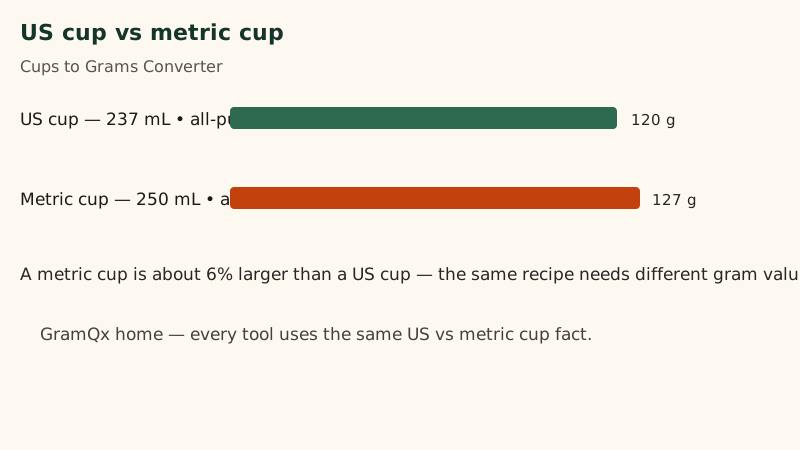
A US cup is 236.6 mL and a metric cup is 250 mL, about 6% larger. Use the cup switch on the converter, or convert by grams and weigh — grams are the same in every country.
Yes. Every tool on this site is free, with no account, no download and no payment, and every calculation runs in your browser.